
Behind the SCENe: How Women are Powering Change in the AFRICAN SCENe Pilot Project

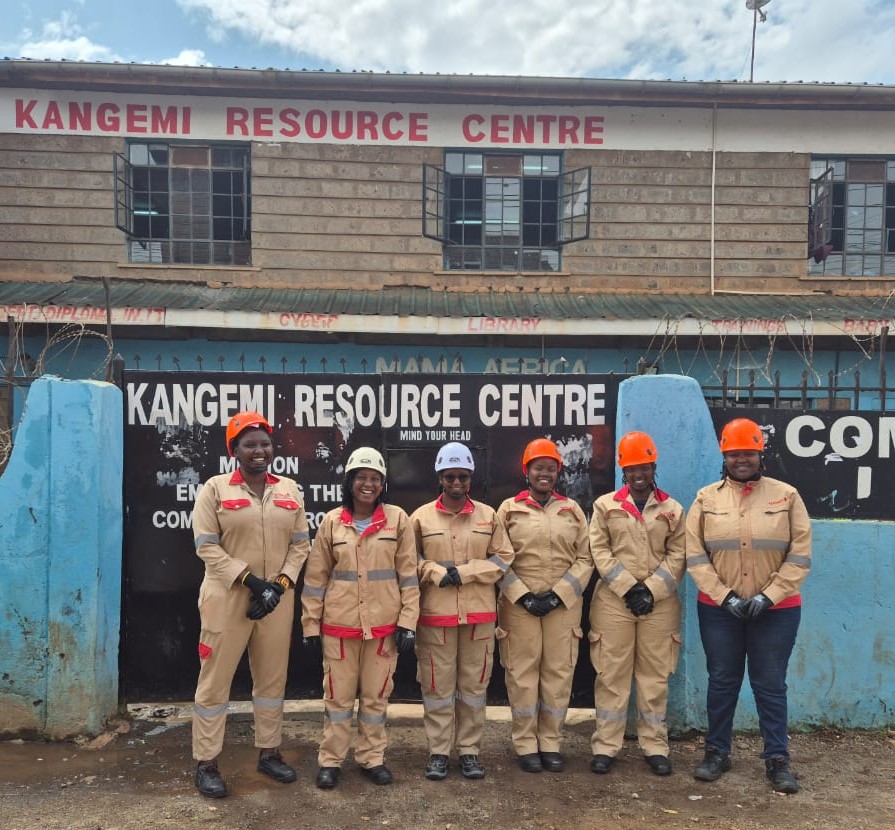
Across nine education centres, about 250 kW of solar power is doing more than increasing access to education. With the vision to make clean energy accessible in ways that accelerate climate action and enable children and communities to thrive, the AFRICAN SCENe project has taken root in eight education centres in informal settlements in Nairobi, namely: Mashimoni Squatters Primary School, Chrisco Education Centre, Joysprings Education Centre and Raila Education Centre in Kibera, Prosperity Junior Centre, Wisedorme Multipurpose Centre School, Tumaini Hope Centre, and Kangemi Resource Centre in Kangemi.1
The Pilot at a Glance
This project, a conglomeration of the University of Nottingham, Smartklub, Edu-Cater Global, Human Needs Project, Kangemi Resource Centre, Map Kibera, Prompt BI, Strathmore University and WISEe Africa, demonstrates an expansive pipeline dream from empowering education centres to becoming community energy hubs that serve the surrounding communities.2 These community assets generate value through after school activities that entail clean cooking, water pumping, laundry services, and adult digital literacy classes all powered by solar energy.
Women at the Forefront Advancing Clean Energy
“Women can take up technical roles and actively shape the future of the energy sector.”
— Maureen Otieno, WISEe Africa Cooperative Member
WISEe Africa’s entry into this project is integral as it centres women in the push for clean affordable energy.
Over the past year, eight members of WISEe Cooperative Society have taken part in this integral piloting process entailing solar system planning, panel installation, grid integration, inverter configuration, DC and AC wiring, and system commissioning. The involvement of Nina Mugure, Elizabeth Gichahe, Leah Kanyangi, Ivy Khasoa, Maureen Otieno, Odilia Juma, Loice Nyamasege and Phoebe Ogenga in the piloting of the AFRICAN SCENe project not only uplifts underserved communities but also puts women with technical expertise at the forefront in the push for the vast adoption of clean energy in Kenya and beyond.
“AFRICAN SCENe showed me that when women lead the work, the power stays on, and it powers far more than lights.”
— Nina Mugure, Project Manager, WISEe Africa Cooperative
Project Leads who Wore Many Hats
As Project Manager and Lead Engineer for WISEe on the Africa SCENe pilot, Elizabeth and Nina worked on the solar PV rollout across the eight schools. They led WISEe Africa’s engagement with the project partners and managed the installation team whilst taking part in installations hence making sure the work was high quality and met ISO standards. Nina and Elizabeth were also part of the team that supported the development of the schools’ business models, specifically by providing technical support on how to run services such as clean cooking, laundry, water pumping and ICT classes on the installed solar systems.
Building Skills One Installation at a Time
For Odilia, Ivy, Loice and Maureen, taking part in the AFRICAN SCENe project allowed them to build their technical skills further whilst creating opportunities and transforming underserved communities. To Odilia, the impact of this project makes engineering meaningful.
|
Mounting solar PV panels onto the roof rails during installation. |
Hands-on assembly and wiring of electrical components. |
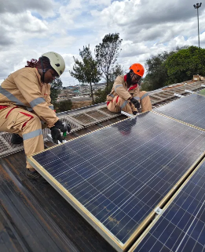
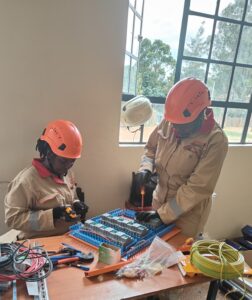
For Maureen, a sustainability expert, this was her first experience participating in a commercial solar PV installation, thus providing an opportunity to translate technical knowledge into practical, hands-on experience in the field. Working alongside other women in the installation of solar systems in schools strengthened her confidence, expanded her technical skills.
“Renewable energy is not just about generating electricity; it is about creating opportunities, transforming communities, and changing lives. For me, the greatest achievement is not simply installing a solar system, but seeing how that energy creates possibilities, empowers communities and changes lives. That is the kind of impact that makes engineering meaningful.”
— Odilia Juma, WISEe Africa Cooperative Member
“My first commercial solar installation taught me that sometimes the best way to break barriers is simply to show up, get hands-on and demonstrate what women in STEM can do.”
— Maureen Otieno, WISEe Africa Cooperative Member
What Next?
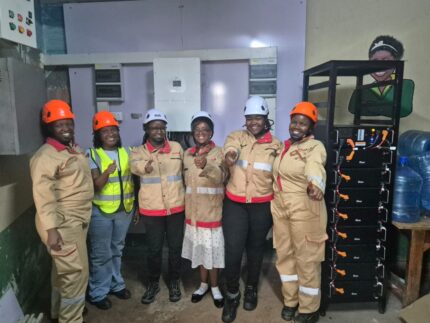
The team beside the battery storage and inverter at one of the installed sites.
The piloting has lapsed and that ushers the monitoring and evaluation phase in 2027. The team hopes to scale to 10,000 schools in Africa. If the pilot is any indication, that growth will be built on skilled women who show up, get hands-on and lead.
Sources
- Strathmore University Energy Research Centre. (2025). The SCENe is Set: Community Energy Hubs Ignite Transformation in Kangemi and Kibera. Nairobi: Strathmore University Energy Research Centre. Retrieved from https://serc.strathmore.edu/the-scene-is-set-community-energy-hubs-ignite-transformation-in-kangemi-and-kibera/
- University of Nottingham. (2025). AFRICAN SCENe: Powering Communities Through Schools. University of Nottingham. Retrieved from https://www.projectscene.uk/